




Global Dairy Market: Prices Are Looking Up Against the Background of Slowing Milk Yields
According to Rabobank data, the global dairy market is transitioning from a period of significant growth in raw milk production to greater uncertainty regarding its…

World Milk Price Is Stabilizing: What Does This Mean for Ukrainian Producers?
The global dairy market in the second half of 2026 remains relatively balanced, however, production growth rates are slowing down, and risks to milk and…
News
Milk Prices in the EU Are Rising
European farmers may face a further reduction in margins even amid a recovery in raw milk prices. Production costs will create additional pressure on raw milk prices.
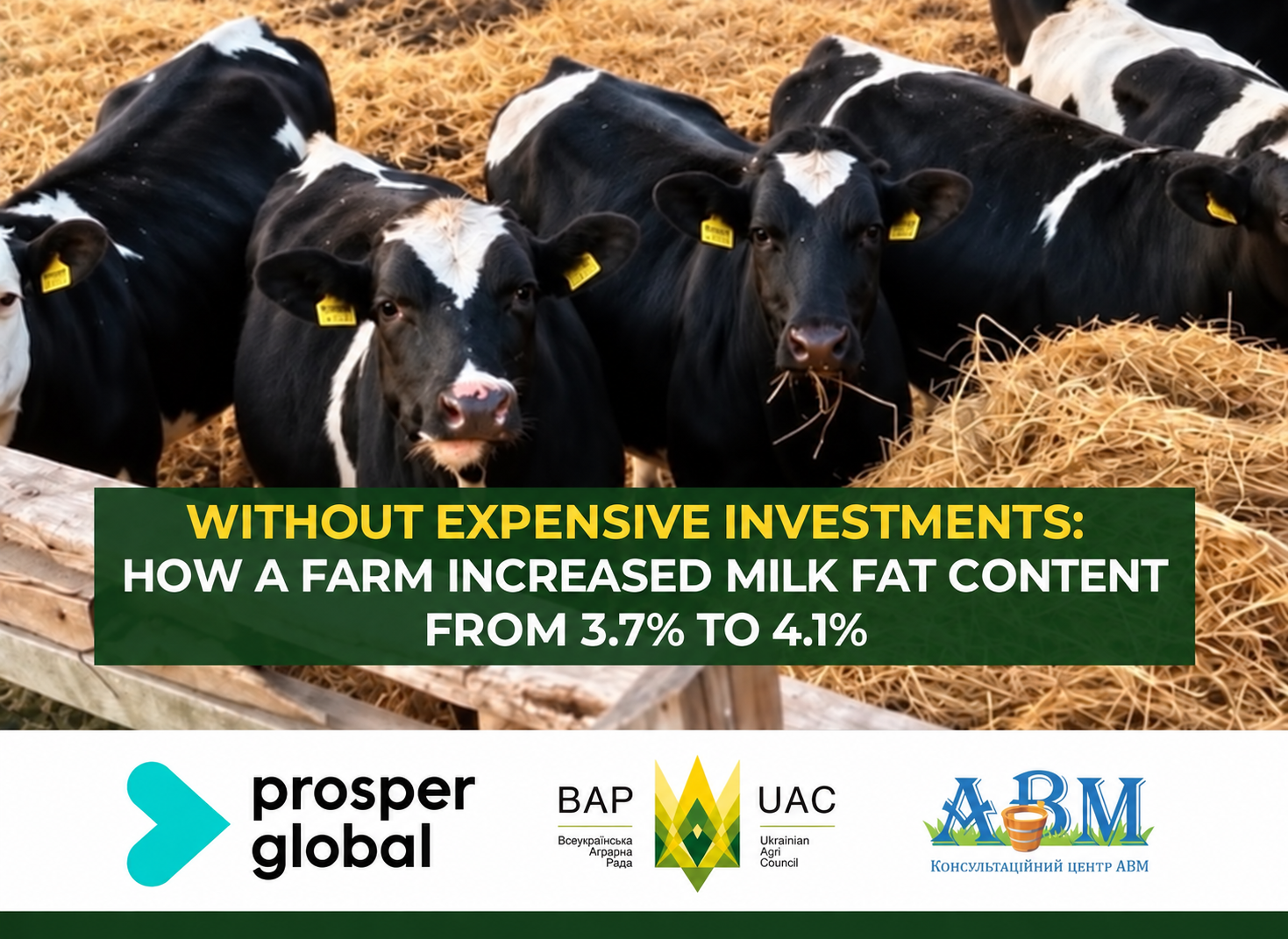
Without Expensive Investments: How a Farm Raised Milk Fat Content from 3.7% to 4.1%
After the start of the full-scale war, the dairy farm LLC "Ponory" in the Chernihiv region suffered significant losses. Due to the inability to sell milk, declining productivity, and forced culling of cows, the enterprise lost about UAH 17 million. Despite this, the farm continued to operate and restore production. Today, 504 milking cows are kept here, and the farm provides over 80 jobs in the community.
The Future of the Global Dairy Sector: More Value from Every Ton of Raw Milk
On September 27–30 in Parma, Italy, over 200 representatives of the global dairy industry gathered at the IFCN 2026 conference "Efficiency, Innovation, and Cooperation in a Volatile Market" to discuss the future of the sector under volatile market conditions.
GDT Auction: Milk Powder Led the Auction into Positive Territory
According to the auction results, the price index increased against the background of rising prices for whole milk powder, demand for which intensified in Asian countries due to buyers' concerns regarding a drop in milk yields in Oceania and South America as a result of the El Niño natural phenomenon.

Consolidation Saved the US Dairy Industry
Rising costs for feed, fertilizers, labor, and other resources increasingly complicate the survival of small farms. As of 2022, industrial farms keeping at least 2,500 cows accounted for about 45% of all milk sales in the US. Consolidation occurs not only among farming operations, but also among dairy cooperatives that represent the interests of farmers. According to Civicmedia, the majority of dairy farmers sell raw milk through cooperatives. At the same time, the number of dairy cooperatives in the US decreased from over 1,900 in 1952 to 107 in 2023.
Global Dairy Market: Prices Are Looking Up Against the Background of Slowing Milk Yields
According to Rabobank data, the global dairy market is transitioning from a period of significant growth in raw milk production to greater uncertainty regarding its supply. It is expected that the growth rate of production in the world's dairy regions may decline in the fourth quarter of 2026, and in the first half of 2027 it will remain stable. Raw milk production growth will likely continue in the US and Australia, but at a more moderate pace. The El Niño weather phenomenon creates a risk of reduced raw milk production in New Zealand and South America. Milk powder and dairy proteins remain the most resilient segments of the exchange-traded dairy complex thanks to the growing popularity of GLP-1 drugs, stable demand from Asian countries, and signs of market stabilization in China. Milk fat markets remain sufficiently supplied.

The Journey of Milk at 360°: How the Association of Milk Producers Celebrated World School Milk Day with UAL Students!
Every year, on the last Wednesday of September, the world unites around healthy nutrition for children — celebrating World School Milk Day. This event highlights the importance of milk as a source of essential nutrients for child development. Dairy products provide the body with high-quality protein, calcium, phosphorus, potassium, iodine, and vitamins B2 and B, and also contain immunoglobulins that increase resistance to viruses and bacteria.
Export Demand Supports Milk Prices in Ukraine
Raw milk prices in Ukraine are supported by export demand, rising global prices for butter and milk powder, and shrinking raw milk supply in producer regions. At the same time, domestic demand, logistics, and finished product sales will remain the main factors that could restrain further growth in procurement prices.
Ukraine Increased Beef Exports Against the Background of Changes in the Global Market
In 2026, global beef production may decrease by almost 2%, which, together with a reduction in herd sizes in producer regions and trade restrictions, could support high prices, creating favorable conditions for Ukrainian exporters.