





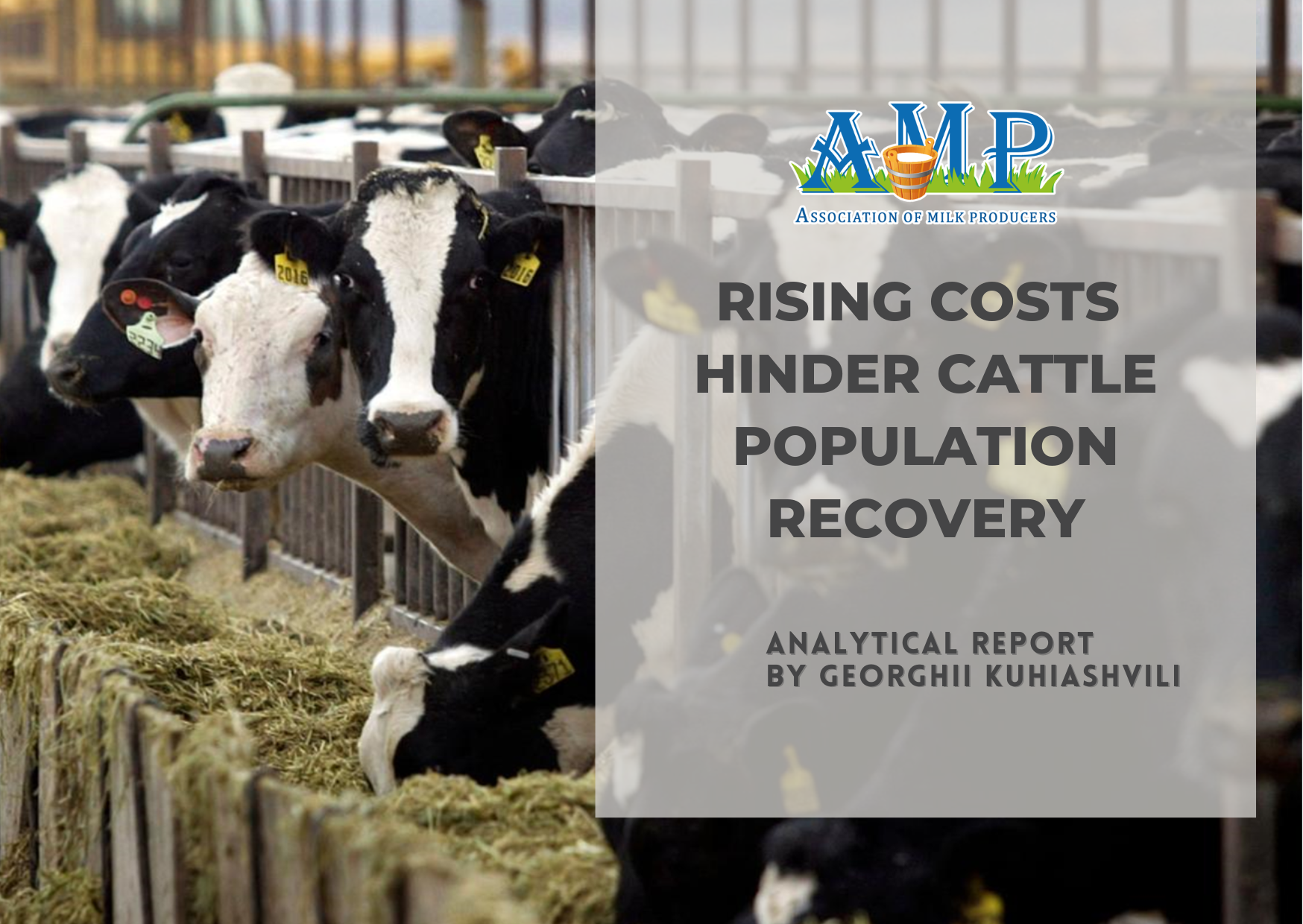
The drop in raw milk prices, high global beef prices, energy risks, and the rising cost of fuel and fertilizers may lead to increased farmer expenditures and a further contraction of the cow population in 2026. At the same time, a natural deficit of high-quality milk in the EU in the short term could drive procurement prices up in 2028–2030, aligning with the interests of Ukrainian milk producers and dairy exporters.
According to preliminary data from the State Statistics Service, as of March 1, 2026, Ukraine’s household and industrial sectors hold 1,745.5 thousand head of cattle, including 953.1 thousand cows. Compared to February 1, 2026, the cattle population in Ukraine grew by 20.7 thousand head (+1%), while the number of cows decreased by 5.6 thousand head (-1%). Compared to March 1, 2025, the cattle population fell by 337 thousand head (-16%), with the cow population declining by 197 thousand head (-17%). Approximately 54% of the animals are kept by industrial enterprises, while 46% are held by households.
The industrial sector holds 950.5 thousand head of cattle, which is 2 thousand head fewer (-0.2%) than on February 1, 2026. The cow population stands at 395.0 thousand head, having decreased by 900 head (-0.2%) over the past month. Over the last year, the cattle population at enterprises increased by 32.5 thousand head (+4%), and the number of cows rose by 18.3 thousand head (+5%).
The household sector accounts for 795 thousand head of cattle, up by 22 thousand head (+3%) compared to February 1, 2026. As of March 1, 2026, the number of cows in households was 558.1 thousand head, which is 5 thousand head fewer (-1%) than a month ago. Over the last year, the cattle population in households decreased by 369 thousand head (-32%), and the number of cows declined by 215 thousand head (-28%).
According to preliminary data from the State Statistics Service, growth in the cow population was recorded at agricultural enterprises in 14 regions: Rivne (+21%), Lviv (+11%), Kharkiv (+11%), Volyn (+10%), Ternopil (+7%), Khmelnytskyi (+7%), Chernihiv (+6%), Zhytomyr (+5%), Cherkasy (+5%), Vinnytsia (+2%), Ivano-Frankivsk (+2%), Kyiv (+2%), Mykolaiv (+2%), and Poltava (+1%) relative to March 1 of last year.
According to the "Agricultural Market Forecast for Ukraine for 2026" report by the Ministry of Economy, Environment, and Agriculture, the largest decline is occurring in private households, primarily in eastern regions due to combat operations and risks to farms. Furthermore, keeping cows in rural areas is becoming economically challenging without state support and relevant programs. In central and western regions, the cattle population remains relatively stable, with sporadic minor increases at agricultural enterprises. Nearly half of the total population consists of cows, reflecting the growing demand for dairy products.
The reduction of the cattle population is a long-standing issue in Ukraine due to the lack of an effective state program to support dairy farming. The war has only exacerbated the situation. Agricultural enterprises are relocating cows from the Sumy and Dnipropetrovsk regions to safer areas in Western Ukraine amid intensifying Russian missile and bomb strikes on border and frontline settlements. The cow population decreased in the Zakarpattia and Chernivtsi regions, likely due to the culling of unproductive animals.
Most farms in Ukraine were built in the 1970s and 80s and no longer meet modern animal welfare requirements. The shortage of facilities suitable for housing cows creates conditions for further population decline. Many farmers are not investing in increasing their herds during the war and are experiencing a deficit of working capital. According to the study "Ukraine: Impact of War on the Profitability of Agricultural Production" conducted by UCAB and the Ministry of Agrarian Policy (since July 2025, the Ministry of Economy, Environment, and Agriculture) with support from GFDRR, production costs for farmers are rising faster than finished product prices due to the increasing cost of feed and electricity, the devaluation of the hryvnia, and the decline in consumer purchasing power.
Nevertheless, dairy farms in relatively safe regions of Ukraine are modernizing existing facilities and constructing new ones. They are also increasing their high-productivity herds. According to AVM estimates, at least 40 enterprises are currently implementing these measures.
It is probable that a sharp drop in raw milk prices—caused by an unpredictable increase in global milk and dairy production in the second half of 2025—and rising production costs at dairy farms could lead to a reduction in the cow population or the exit of certain farms with fewer than 400 head during 2026. The situation is complicated by Russian attacks on energy infrastructure, long-term power outages, and rising oil and natural gas prices resulting from hostilities in the Middle East. These factors have led to a reduction in fertilizer production and increased costs for ammonium nitrate, urea, and UAN-32. This may result in higher expenditures for farmers producing feed for cow nutrition. At the same time, high beef prices on export markets may encourage farmers to cull a portion of their herds.
However, those dairy farms that can maintain their herds despite these difficult conditions will benefit in the foreseeable future. In 2028–2030, procurement prices are likely to be higher than in 2020–2024 due to certain farms in the EU exiting the industry, reduced milk yields, and the emergence of a deficit in high-quality milk. Ukraine has the opportunity to partially compensate for this deficit and increase dairy exports to the European market.
To support dairy farms during this challenging period, the Association of Milk Producers (AVM) proposed that the Government of Ukraine introduce a one-time financial aid package of 8,000 UAH per cow, regardless of farm size. It is planned to secure international funding for this purpose. A similar mechanism has been in place since 2023 to support small farms with up to 100 cows. Currently, it is proposed to extend this support to all commercial dairy farms. The issue was discussed during a roundtable meeting at the Agrarian Committee of the Verkhovna Rada. Members of Parliament expressed support for the initiative.
The Government of Ukraine is expected to consider allocating 62 million EUR for this program, which would partially cover the costs of maintaining cows during the dry period for two months. Additionally, the state plans to increase the total volume of support for livestock farming. Aid is expected to be directed not only toward farm construction compensation but also toward reimbursing the cost of purchasing heifers, in accordance with existing state programs.
Regionally, approximately 53% of the total cattle population is held by all categories of households in the following regions:
- Poltava region — 164.10 thousand head;
- Vinnytsia region — 149.20 thousand head;
- Khmelnytskyi region — 145.50 thousand head;
- Chernihiv region — 124.50 thousand head;
- Cherkasy region — 124.10 thousand head;
- Odesa region — 118.20 thousand head;
- Kyiv region — 104.40 thousand head.
Press service of the Association of Milk Producers
Follow us on LinkedIn
Related News: