





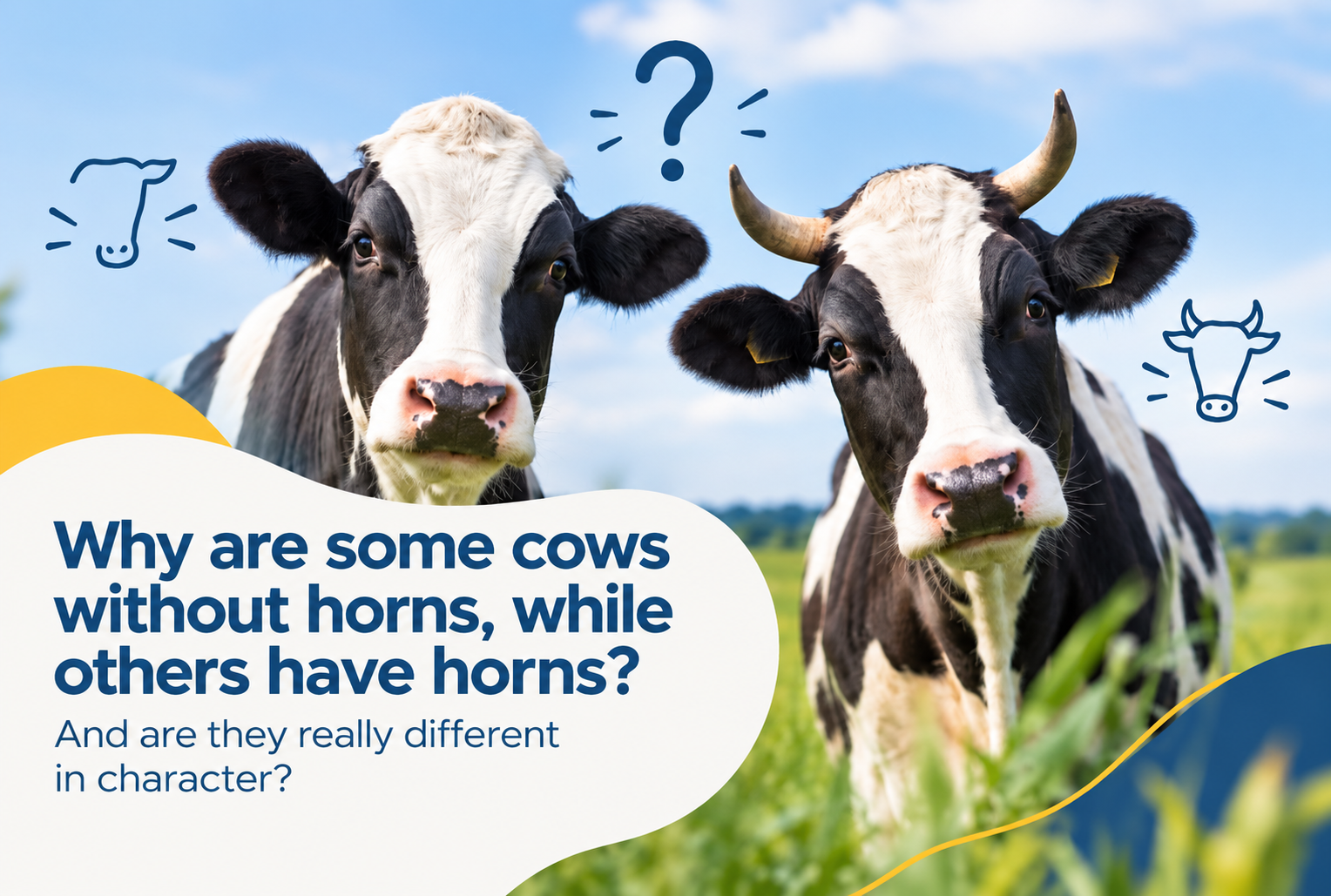
Why are some cows hornless, while others have horns? And are they really different in temperament, too? It is actually much more interesting than simply "this cow was born without horns."
There is polledness — a genetic absence of horns. Such calves are born without horn buds, and as adults, they will not have horns. Polledness is inherited, which is why it was intentionally reinforced through breeding in certain breeds. And then there are cows born with horns that were disbudded or dehorned at a young age. So externally the result is the same — a cow without horns — but the origin is completely different.
As for temperament — this is where it gets most interesting. The presence or absence of horns in itself does not determine a cow's personality. A polled cow is not automatically gentle, and a horned one is not automatically aggressive.
Behavior is influenced far more by:
- genetics and the temperament of the specific animal;
- breed and individual traits;
- housing conditions;
- how humans treat the animal;
- previous experiences and stress;
- pain or disease.
That is why you can find a completely polled cow looking at you as if you are personally responsible for all her problems, and a horned one standing by, sweetly chewing hay. Or vice versa. And during an illness, either one can make you dance quite a bit.
And one small nuance: horns are not "personality." A horned cow simply possesses a natural tool to defend herself, claim her spot at the feed bunk, or establish social hierarchy. This is precisely what people try to minimize through dehorning. Anyone who has ever seen the injuries they can inflict on one another will understand what we mean.
So judging a cow's character by her horns is roughly like judging a woman's personality by the length of her fingernails.
Press service of the Association of Milk Producers
Follow us on LinkedIn
Related News